Colleges · 2005–2023
MLB Players from Grayson College
Every major leaguer whose record lists Grayson College as his college and who took a plate appearance or threw a pitch in a published season, with what they have done since 2005 — and who is playing now.
- Players
- 9 2005–2023
- Active in 2026
- 0
- Total dbWAR
- 38.2
- Home runs
- 45
- Strikeouts
- 2,246 2,610.1 IP
- Batters / pitchers
- 4 / 5
Notable
Superlatives over the seasons published here, not over whole careers.

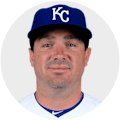
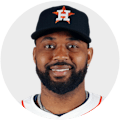
The All-Grayson College Team
The best major leaguer from Grayson College at each position since 2005, by the dbWAR he produced there. Positions nobody has filled are left open.

And on the mound
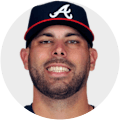
How this is picked. Each player is filed at the one position he appeared at most often — so a shortstop who spent two years at third is a shortstop, and cannot hold both slots — and the spot goes to whoever produced the most dbWAR there. The figure on a card is therefore the value at that position rather than the career total shown elsewhere on this page: they differ for anyone who moved. Starting and relieving are counted separately for the same reason, on the share of each season's appearances that were starts. A slot needs 100 plate appearances or 20 innings to be claimed at all, which keeps a September call-up from becoming a first baseman. 2 position players are eligible here, with 1 starters and 2 relievers.
In the majors now
Nobody from Grayson College appeared in 2026.
Since 2005
Career totals over the published seasons, ranked by dbWAR.
| Victor Diaz | 2005–2007 | 3 | 432 | 99 | 21 | 65 | 6 | .251 | 0.6 |
| Kevin Thompson | 2006–2007 | 2 | 75 | 14 | 1 | 9 | 2 | .215 | -0.0 |
| Andy LaRoche | 2007–2013 | 6 | 1,336 | 267 | 22 | 113 | 8 | .226 | -0.3 |
| Chris Gittens | 2021 | 1 | 44 | 4 | 1 | 5 | 0 | .111 | -0.3 |
| John Lackey | 2005–2017 | 12 | 2,329.2 | 155 | 0 | 1,930 | 3.81 | 34.7 |
| Jordan Walden | 2010–2015 | 6 | 222.0 | 12 | 39 | 266 | 3.00 | 4.2 |
| Nicholas Padilla | 2022–2023 | 2 | 6.1 | 0 | 0 | 7 | 5.68 | 0.0 |
| Tyler Ivey | 2021 | 1 | 4.2 | 0 | 0 | 3 | 7.71 | 0.0 |
| Jacob Rhame | 2017–2019 | 3 | 47.2 | 2 | 1 | 40 | 6.23 | -0.8 |
By season
How many were in the majors each year, and what they produced.
| Season | Players | Batters | Pitchers | PA | HR | IP | SO | dbWAR |
|---|---|---|---|---|---|---|---|---|
| 2023 | 1 | 0 | 1 | 0 | 0 | 4.2 | 6 | 0.0 |
| 2022 | 1 | 0 | 1 | 0 | 0 | 1.2 | 1 | 0.0 |
| 2021 | 2 | 1 | 1 | 44 | 1 | 4.2 | 3 | -0.3 |
| 2019 | 1 | 0 | 1 | 0 | 0 | 6.1 | 5 | -0.2 |
| 2018 | 1 | 1 | 1 | 1 | 0 | 32.1 | 28 | -0.4 |
| 2017 | 2 | 1 | 2 | 61 | 0 | 179.2 | 156 | 0.1 |
| 2016 | 1 | 1 | 1 | 69 | 0 | 188.1 | 180 | 2.7 |
| 2015 | 2 | 1 | 2 | 70 | 0 | 228.1 | 187 | 3.8 |
| 2014 | 2 | 1 | 2 | 19 | 0 | 248.0 | 226 | 3.1 |
| 2013 | 3 | 2 | 2 | 10 | 0 | 236.1 | 215 | 2.8 |
| 2012 | 1 | 0 | 1 | 0 | 0 | 39.0 | 48 | 0.6 |
| 2011 | 3 | 2 | 2 | 107 | 0 | 220.1 | 175 | 1.7 |
| 2010 | 3 | 2 | 2 | 277 | 4 | 230.1 | 179 | 2.9 |
| 2009 | 2 | 2 | 1 | 599 | 12 | 176.1 | 139 | 5.1 |
| 2008 | 2 | 2 | 1 | 258 | 5 | 163.1 | 130 | 0.2 |
| 2007 | 4 | 4 | 1 | 263 | 10 | 224.0 | 179 | 4.9 |
| 2006 | 3 | 3 | 1 | 51 | 1 | 217.2 | 190 | 5.4 |
| 2005 | 2 | 2 | 1 | 319 | 12 | 209.0 | 199 | 5.7 |
About this page
9 major-league players who went to Grayson College appear in this archive, between 2005 and 2023. John Lackey leads them with 34.7 dbWAR. None appeared in 2026. Together they are worth 38.2 dbWAR, on 45 home runs and 2,246 strikeouts thrown.
John Lackey's best year was 2006, at 5.2 WAR. John Lackey reached the majors earliest of anyone here, in 2002.
Andy LaRoche has hit the most home runs, 22. John Lackey has thrown the most strikeouts, 1,930. The hardest ball anyone from here has struck came off Chris Gittens's bat at 118.0 mph, in 2021. These are totals over the seasons published here rather than whole careers: a player who debuted before 2005 arrives mid-career, and his numbers start where the archive does.
College here means the last college listed on a player's biographical record, and nothing more than that. A player who started at a junior college and transferred is on the page of the school he transferred to, and only there; one whose record lists no college, as most who turned professional out of high school do not, is on none of them. The record does not say whether he was drafted from there or how long he stayed. The list starts in 2005 because the archive does: anyone whose career ended earlier is not here, whatever he did. Every rate statistic and every dbWAR figure is computed from play-by-play using constants measured from each season's own data. See the derivation →
Other colleges
The programs nearest this one by how many major leaguers they have sent.
Every college · players by birthplace · 2026 batting leaders · 2026 pitching leaders · every player · every club.